Twitter Events
Lead UX, Global Participation
Jan 2022 - July 2022
Android, Web
Defined long-term strategy for global event onboarding and engagement features, led creation and implementation of new design system components
Events on Twitter
Global Participation’s charter was to build features that “drove the conversation” on Twitter in global markets.
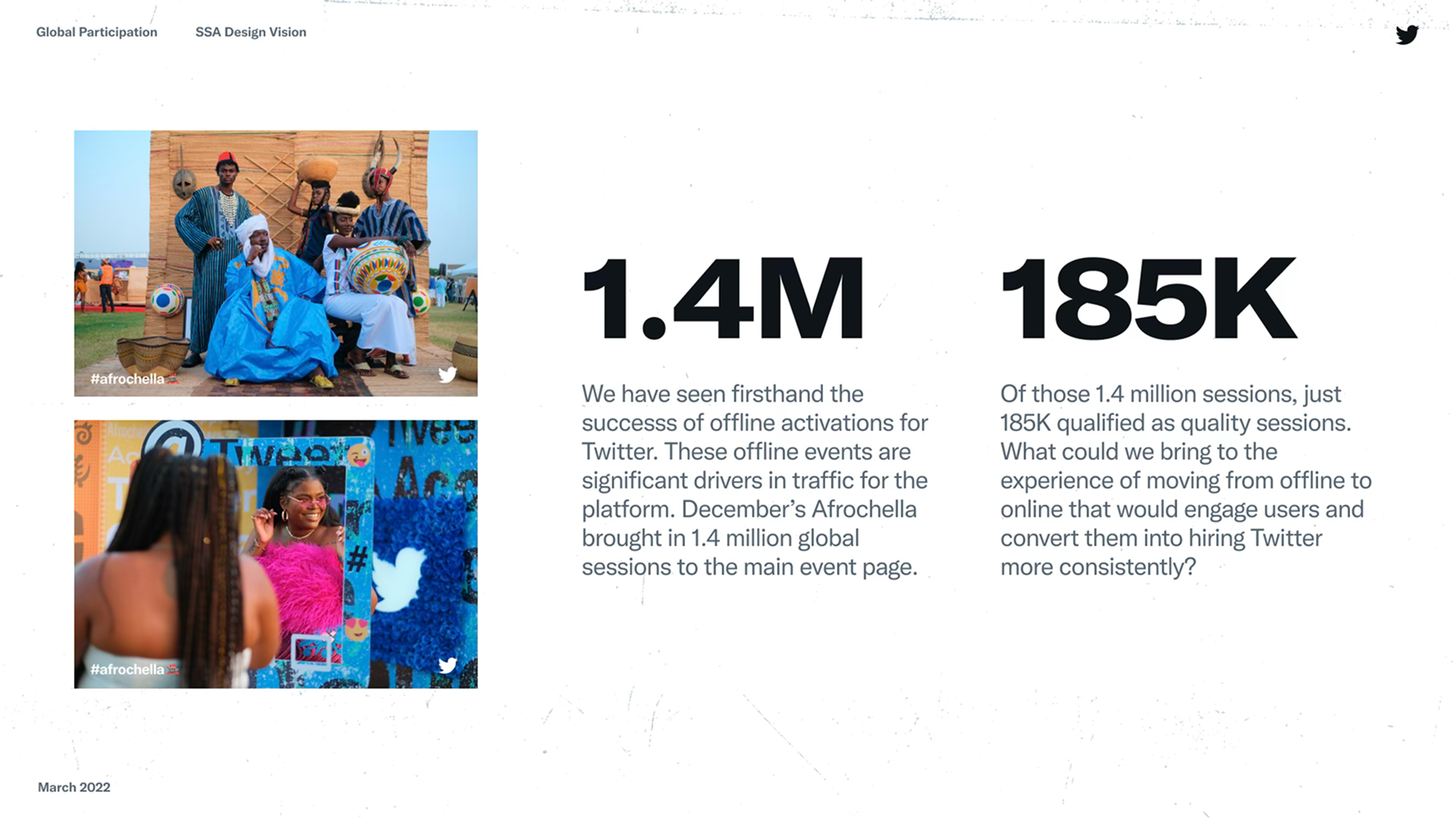
Focused on markets in India and SSA, research showed that user activation on Twitter was largely driven by events and activations that were happening offline. Our marketing and curation teams had strong partnerships on ground, but as these potential users were coming to our app, their experience was falling short.
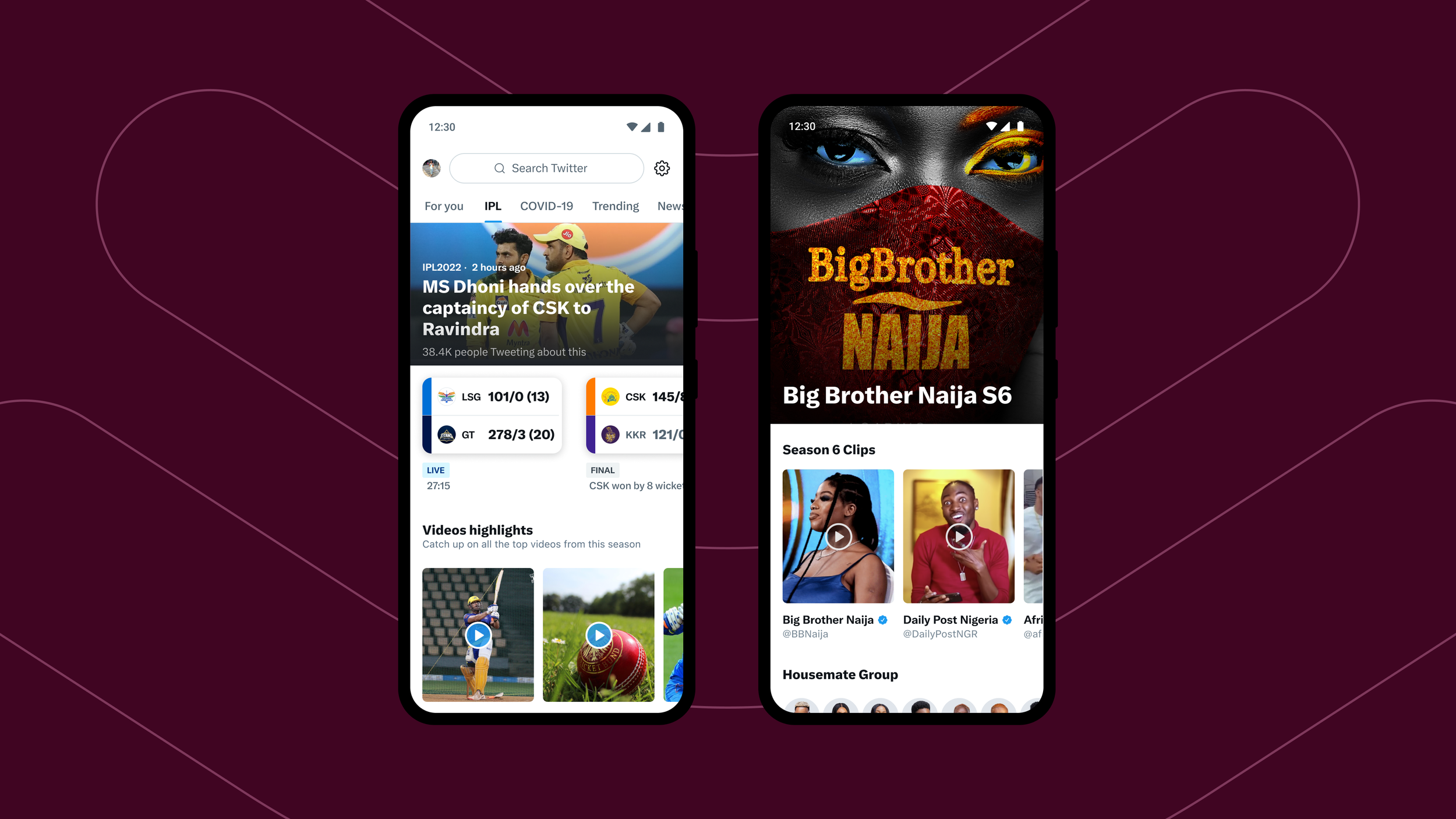
Located under the explore tab, Events was the primary surface that new users were directed to from offline activations and logged out search. The landing experience was confusing; Events was layered with many tabs and randomized page structures. Sometimes users would land on Tweets, sometimes on the For You page (FYP), and other times on topic-specific tabs. New users struggled to discover and engage with content that was relevant to their interests.
If a user was drawn to a tab because of a topic, they’d see selected articles and a lot of Tweets that weren’t necessarily related to it. The pages were content-heavy with a monotonous layout, saturated with UGC and very little curated content. When speaking with Twitter’s curation team, I learned that there was a wealth of content that went unused simply because there were nowhere for it to live.
Indian Premier Leage
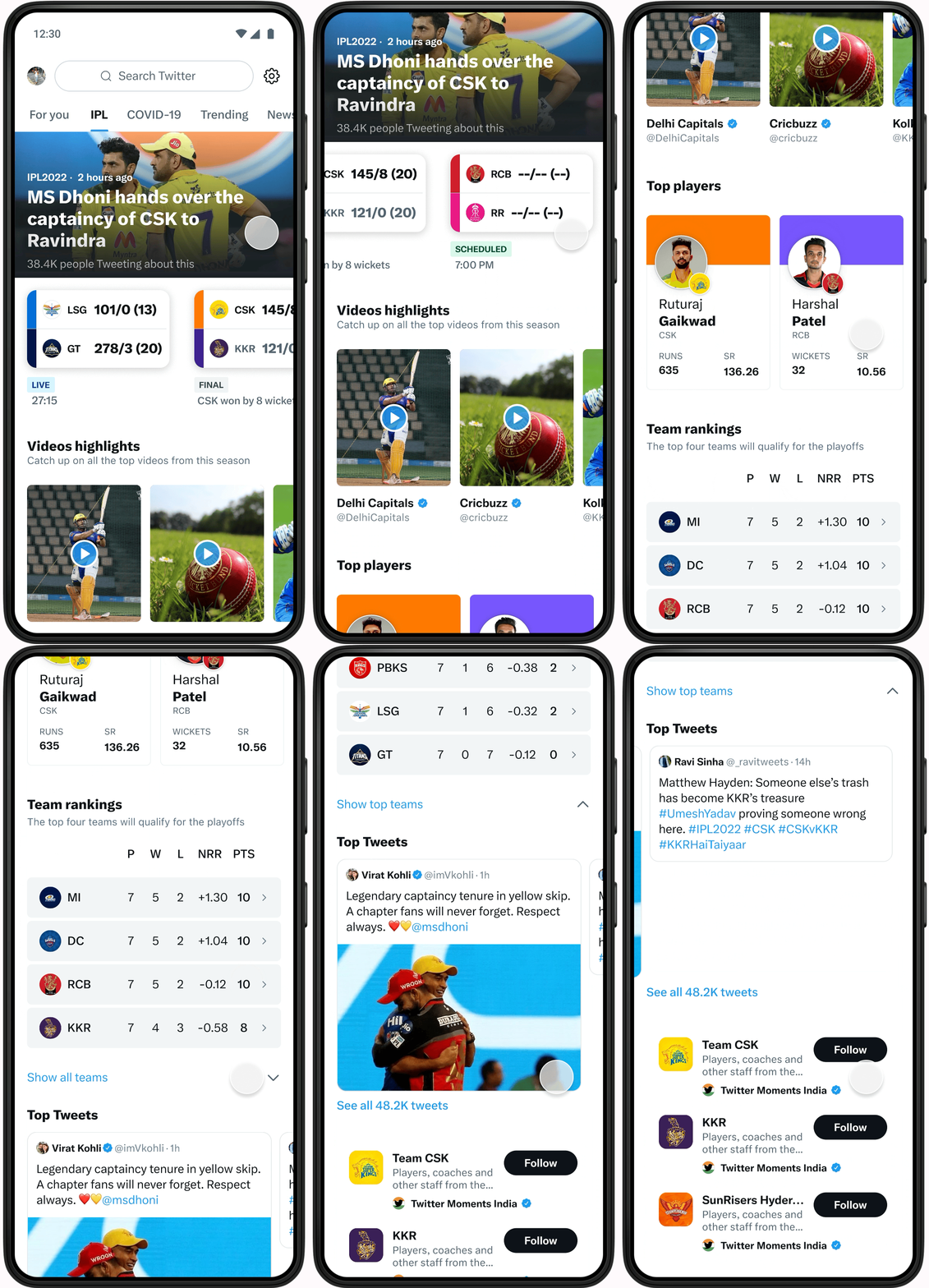
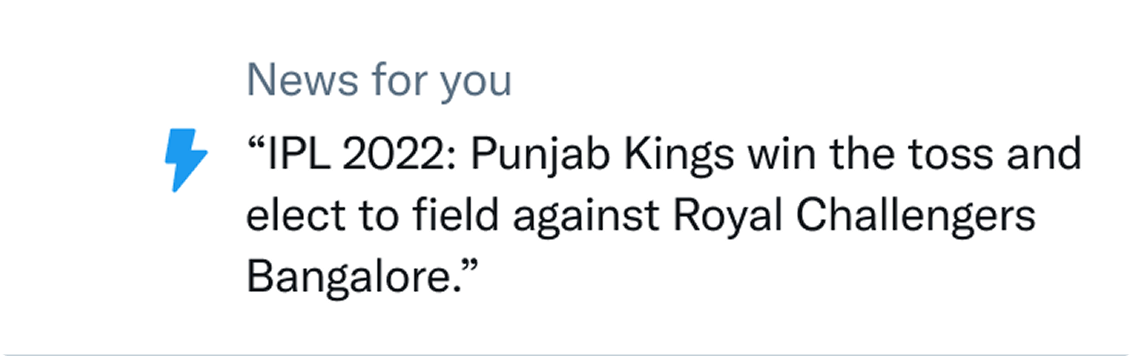
For the first Events tab redesign, we created a cricket-focused sports tab, centered around the Indian Premier League (IPL). I worked with the notifications engineer to construct a plan to direct all offline cricket activation and search notification traffic in the region to this tabbed experiment.
Working with our PM leads, I then tried to make sense of the page structure, evaluating new and existing Twitter features to measure user engagement and consumption patterns as they navigated down the page. We found that Tweets from top players, teams, and stats played a key role in keeping users on the page. As expected video (live matches, highlights, etc.) generated the highest engagement.
In India, many users were dropped into that experience on the Sports tab. Cricket is the most popular sport in India, and about 80% of our monthly active users in India were following and discussing the topic. In our unengaged user cohort, 85% expressed interest by following the cricket topic, but only 15% of those were likely to become daily active users.
Our goal was to redesign the Sports tab so that from the moment users landed on it, there would be enough relevant and engaging content that would encourage their conversion from passive to active use of our Platform.
I studied all of our tabs across markets to see if any layouts were more effective and found that the COVID-19 page created by the Health team was the best-performing. Because we had already done the backend work to drive users to this surface, I took a quick stab at designing the IPL tab by replicating its structure. This initial phase helped our group execute quickly enough to deliver a new experience before the series began, but as the structure was specific to a completely different kind of content the experience missed the mark.
Results from this experiment were nominal, but trended positively towards increased engagement and topic subscription. I combined what the PMs and I had learned during discovery with findings here to construct a narrative for the IPL tab, and how that should be represented in a phased approach.
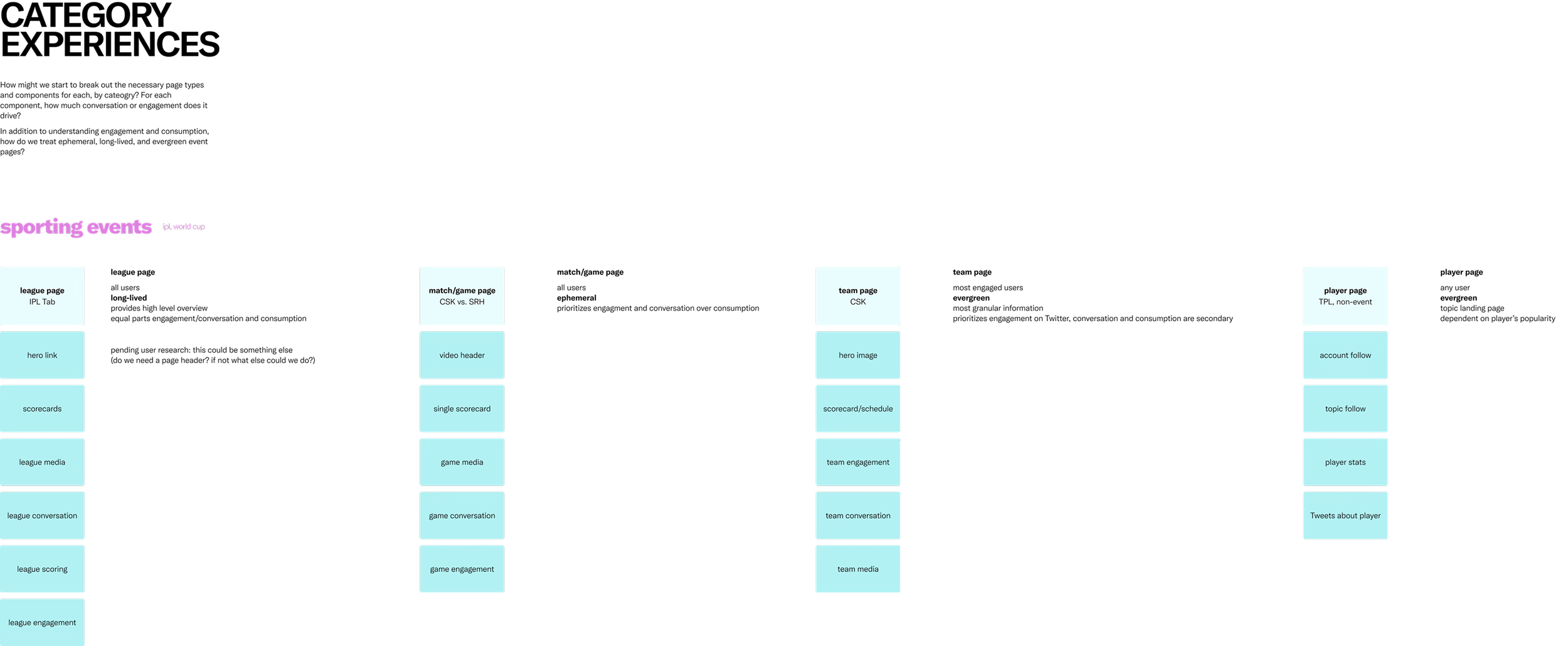
Analyzing old page structures helped me create a new page construct that designated a clear purpose for each page within the experience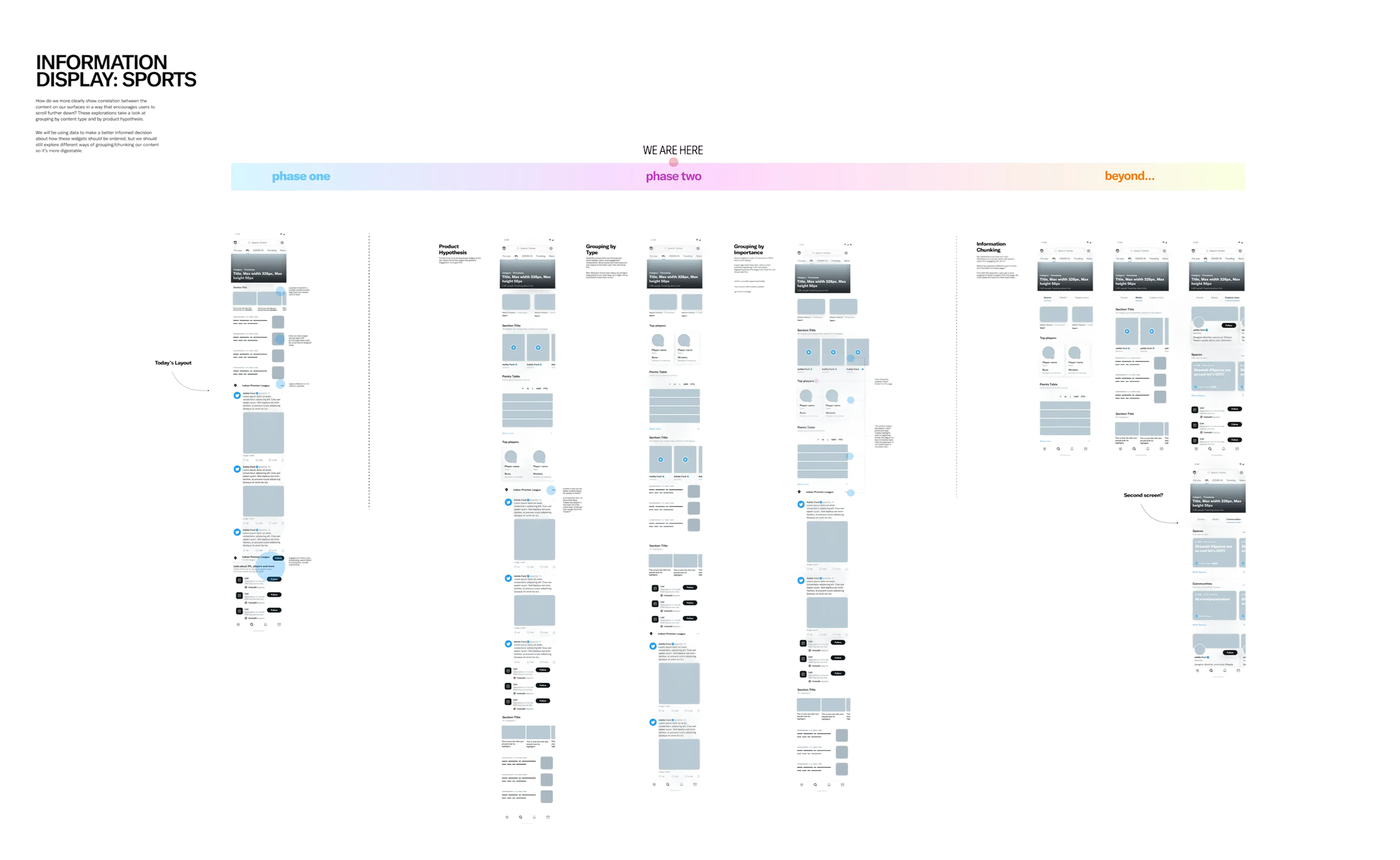
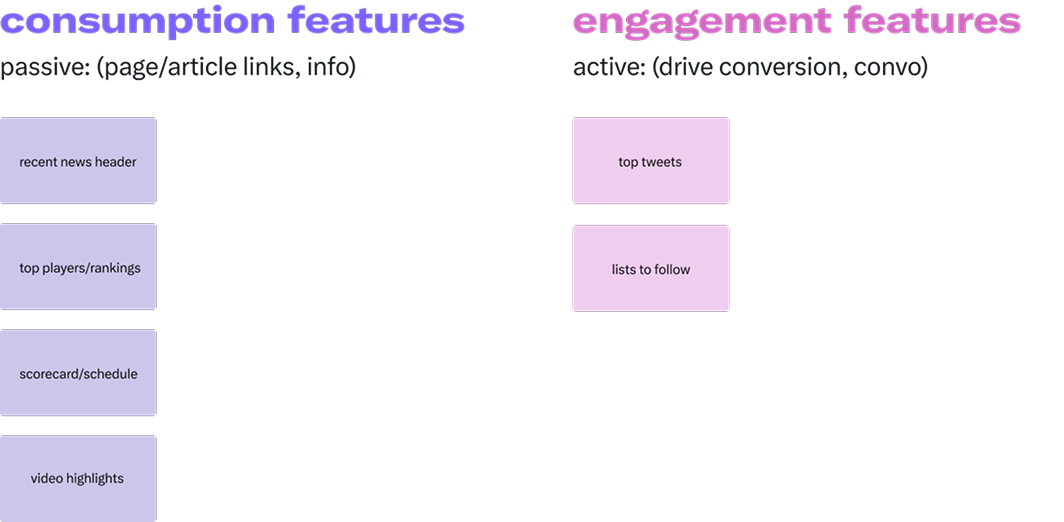
Phased evaluation of IA and feature segmentationAfter a few weeks, the team had a strong theory as to what features we should begin with for the second phase of the IPL tab. The features fell into two categories, engagement and consumption, and the designs were assessed for their legibility, accessibility and scalability.
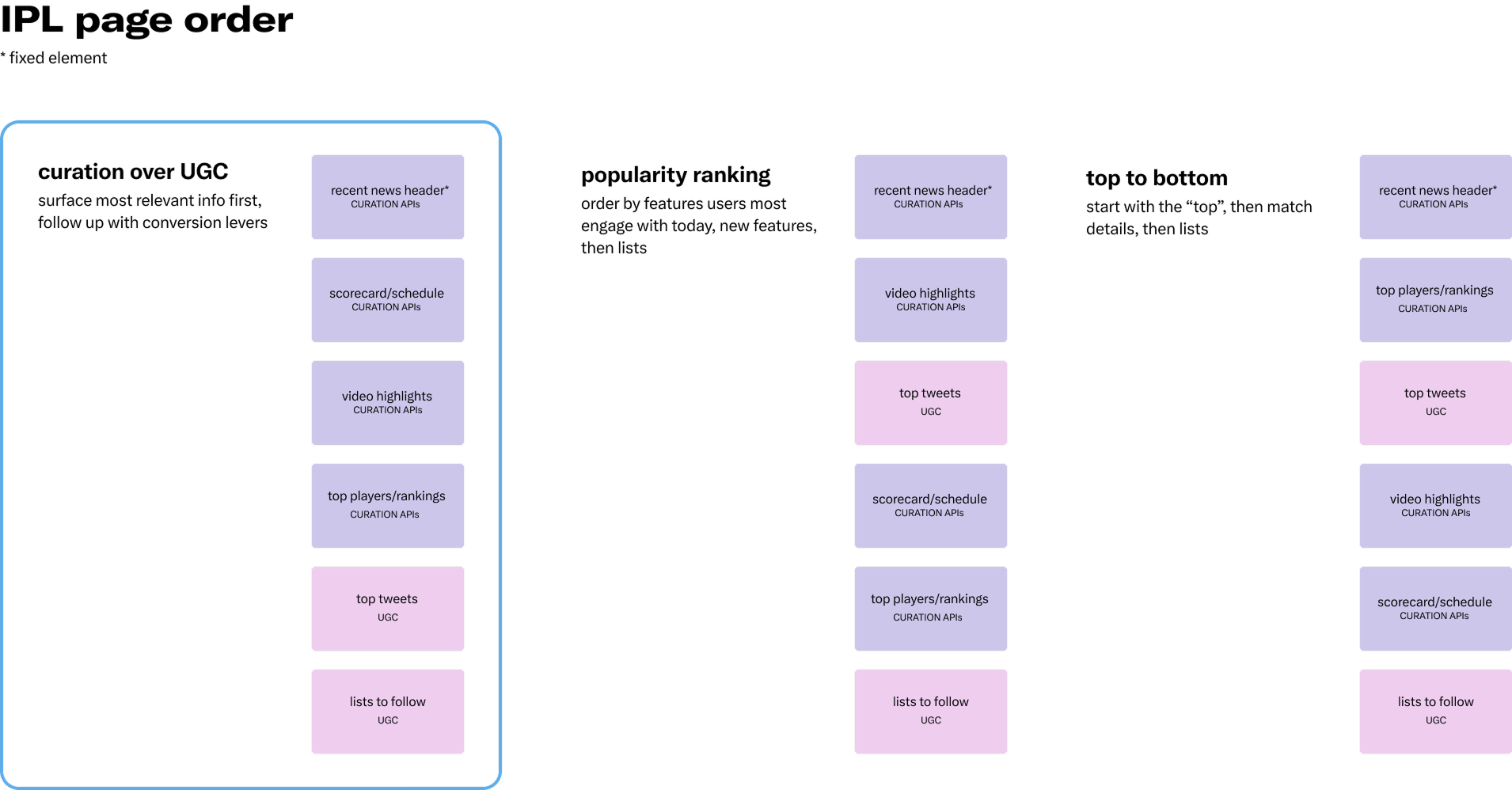
hypothesis: relevancy/recency drives engagement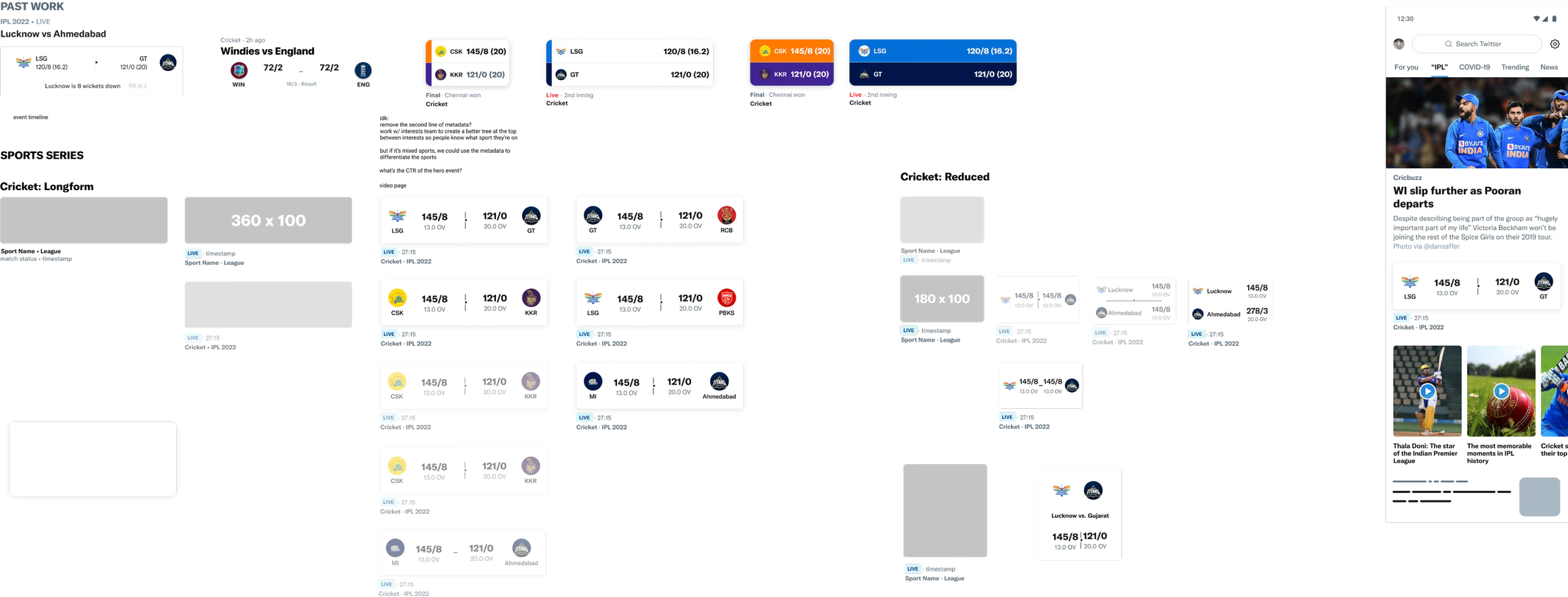
Scorecard explorations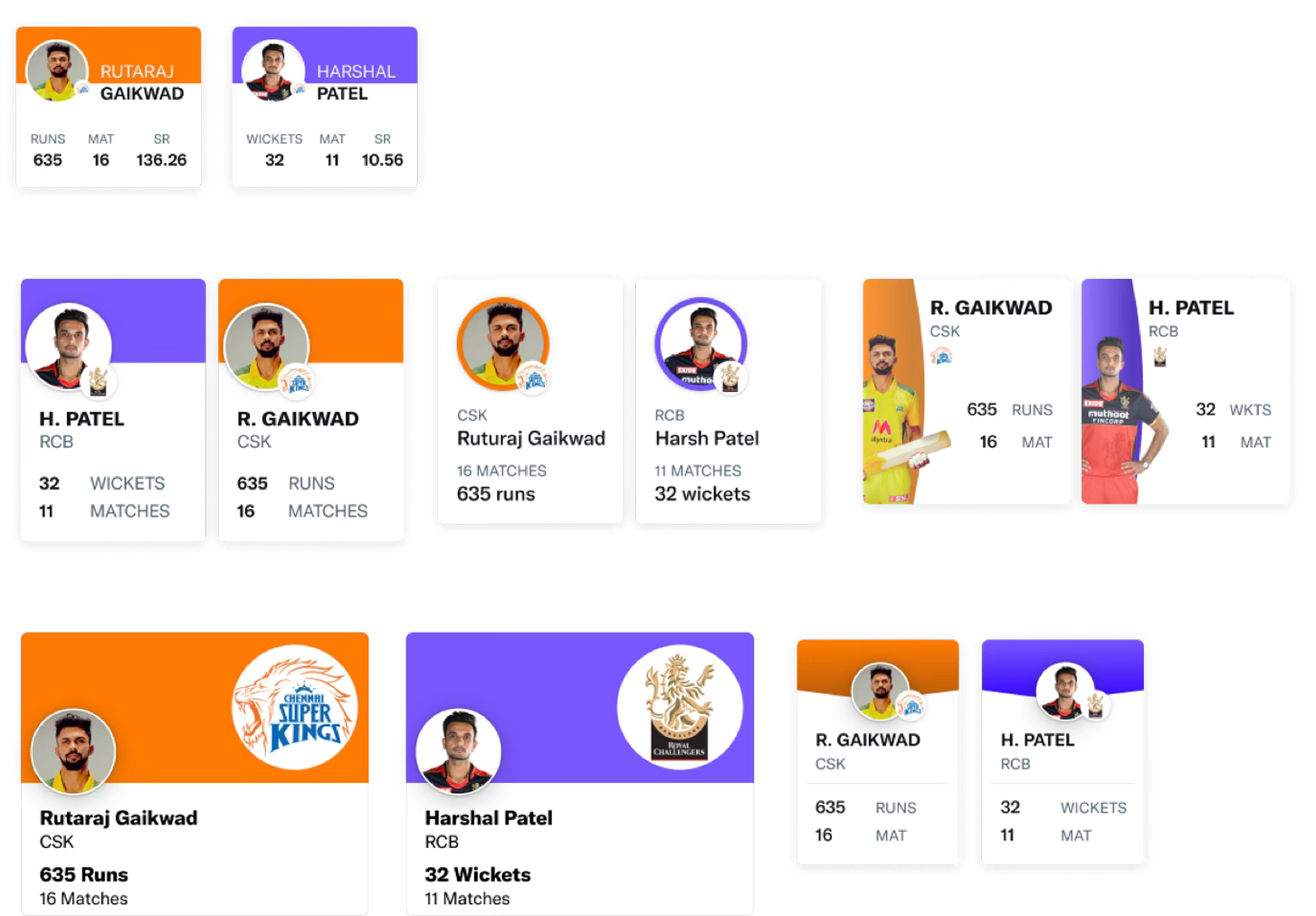
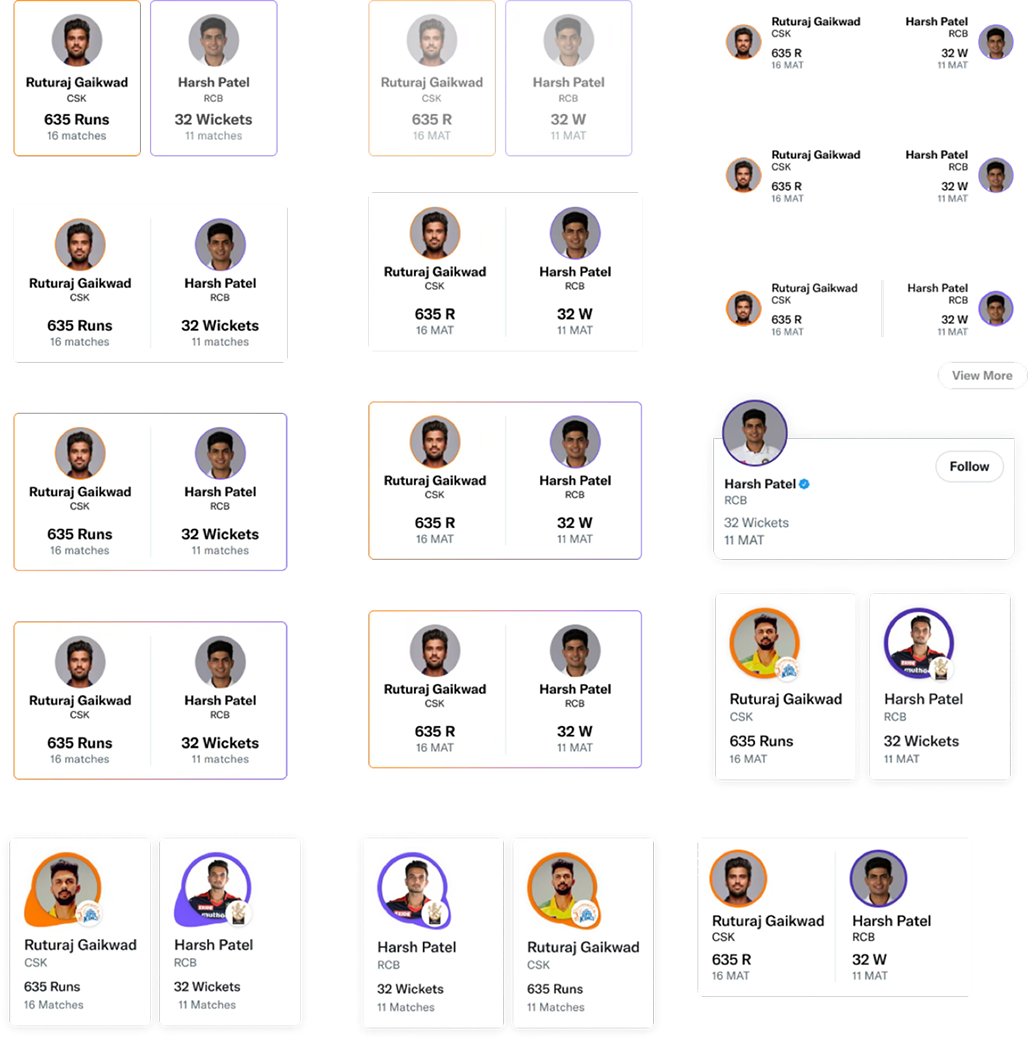
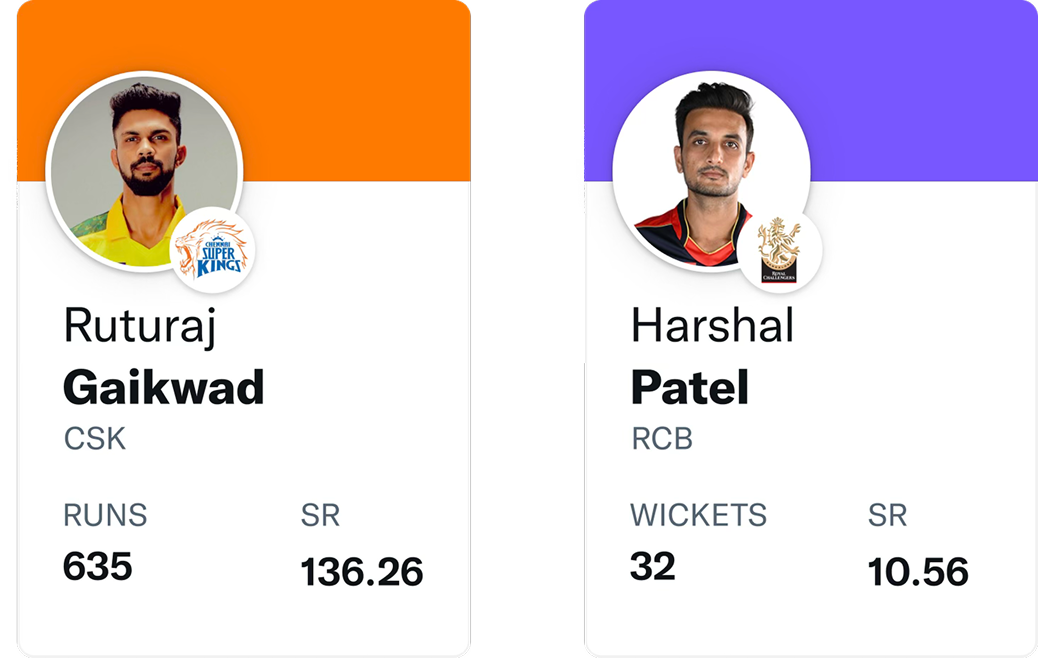
Top player explorations (orange/purple cap)Launch
After we aligned on the design and information architecture of the IPL tab, I worked with marketing to start drumming up excitement for its release. By the time implementation and dogfooding was complete, there was limited time left until the start of the series. The IPL tab launched on Android and Web at the start of the series in April of 2022, and we concurrently ran a usability study with users in India to understand if our experiment could convert passive interest to active use. Around this time, a shift in company ownership was announced and we subsequently lost external resourcing in our India office, pausing the study.